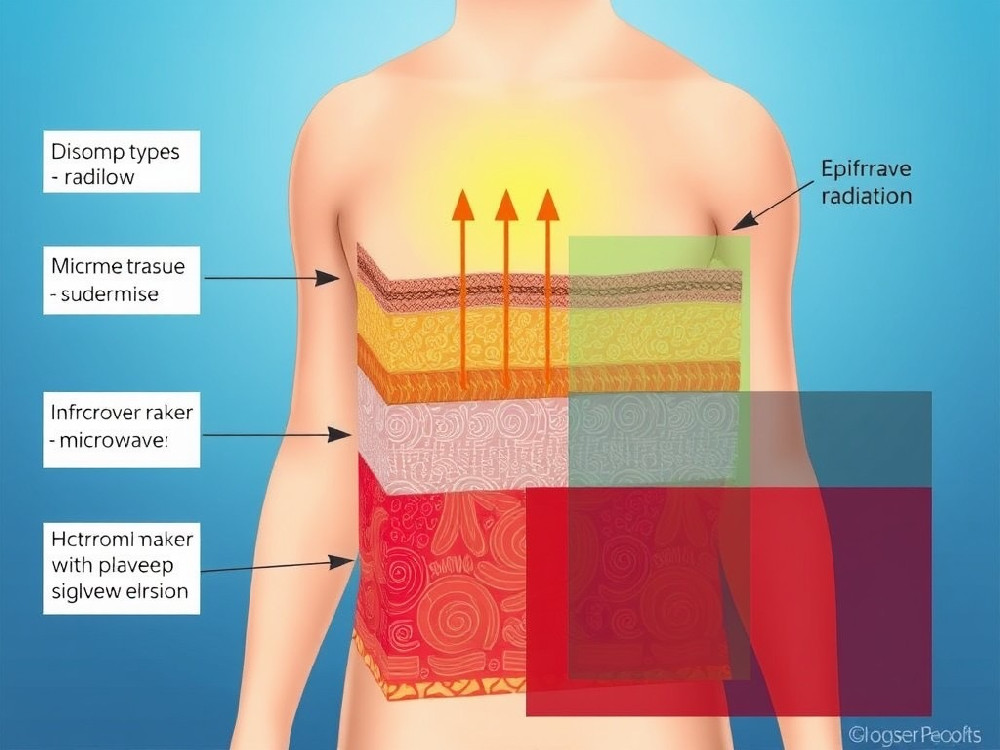
Long wave radiation usually refers to electromagnetic waves with longer wavelengths, such as infrared and microwave. Their penetration through human skin has the following characteristics:
penetration depth
The penetration depth of longwave radiation is usually shallow. Infrared radiation can penetrate the surface of the skin, but its ability to penetrate deep tissues is limited. Specifically:
Infrared: It can penetrate the epidermal layer and affect the dermis layer, but has weaker penetration ability for deep tissues such as muscles and bones.
Microwave: can penetrate deeper into the skin and even reach the fat layer, but its thermal effect may cause overheating.
biological effect
The effects of longwave radiation on the skin are mainly reflected in thermal effects and photochemical reactions:
Thermal effect: Infrared radiation can be absorbed by the skin, causing an increase in local temperature, which helps promote blood circulation and relieve muscle tension.
Photochemical reactions: Certain long wave radiation may trigger photochemical reactions in the skin, which have potential benefits for skin health, such as promoting the synthesis of vitamin D.
3. Safety and Protection
Although long wave radiation is beneficial to the human body in moderate amounts, excessive exposure may cause skin burns or other skin problems. Therefore, appropriate protective measures are very important, such as:
Using sunscreen: Despite the low penetration ability of long wave radiation, sunscreen can still provide additional protection.
Avoid prolonged exposure: In the vicinity of strong infrared or microwave sources, direct exposure time should be minimized as much as possible.
Long wave radiation has relatively shallow penetration into human skin, mainly affecting the surface and some parts of the dermis layer. Moderate use can bring health benefits, but precautions should be taken to avoid potential risks.